
Safe Handling of UXO and IEDs: Operator Protection and Equipment
Introduction
A single, unavoidable reality shapes safe handling of unexploded ordnance and improvised explosive devices: the operator must work in proximity to an item whose internal condition, stability and behaviour cannot be fully known.
Richmond Defence Systems supplies equipment that supports this work by helping trained personnel maintain control, manage risk and protect themselves during the most demanding stages of an RSP (Render Safe Procedure).
This article outlines the role of handling systems, suppression equipment and ballistic protection within that wider safety framework.
Understanding The Demands of Safe Handling
UXO and IED items present a unique combination of uncertainty and physical hazard. Historical ordnance may be corroded, waterlogged or structurally weakened, while improvised devices may incorporate unpredictable mechanisms or materials. In both cases, the operator must assume that the item could behave unexpectedly if disturbed.
To achieve the safest possible handling, the operator needs to be able to carefully control the movement of the UXO or device to avoid destabilising its mechanisms. Whilst carrying out the procedure, they need to be protected to the greatest possible extent from blasts, subsequent fragmentation, and extreme energy surges, which can cause devastating, life-changing or fatal injuries. Also, equipment and PPE need to be reliable and predictable for both safety and operator confidence.
Overview of the product family
Richmond Defence Systems offers a range of equipment designed to support the safe handling and suppression of UXO and IEDs. These products are used by trained EOD personnel working in environments where stability, control and operator protection are critical. The equipment described here forms part of a layered safety approach that combines mechanical handling, explosion suppression systems, and personal protective solutions for the operator.
Handling and Suppression Systems
Handling and suppression systems form the physical interface between the operator and the ordnance. Their purpose is not to neutralise the item but to ensure that any required movement or containment can be carried out in a controlled and predictable manner.
These systems support tasks such as lifting, repositioning, stabilising or shielding an item during an RSP. They are engineered to manage the forces involved in movement, to limit the effects of fragmentation or blast, and to provide a stable working environment for the operator. Suppression equipment, such as containment blankets or blast‑mitigating structures, helps reduce the consequences of an unexpected event by absorbing energy and limiting debris.
The value of these systems lies in their reliability. When an operator commits to a movement or containment action, the equipment must behave exactly as expected. Richmond Defence Systems designs handling and suppression equipment to meet this requirement, ensuring that each component contributes to a predictable and controlled response.
Associated RDS product category: Handling and Suppression.


Ballistic Suits and Operator Protection
Ballistic protection is the operator’s final layer of defence. It is worn or deployed when proximity cannot be avoided, and it is designed to mitigate the effects of a blast, device fragmentation, and overpressure.
The EOD suit must balance protection with mobility as much as is feasible. Operators need to kneel, reach out, manipulate tools and equipment, and maintain situational awareness, all while remaining shielded from hazards. Helmets and visors must provide clear visibility and offer communication capability, while the suit’s fabric and structure should efficiently distribute blast energy away from the person to prevent damage to both the head, body, limbs, and internal organs.
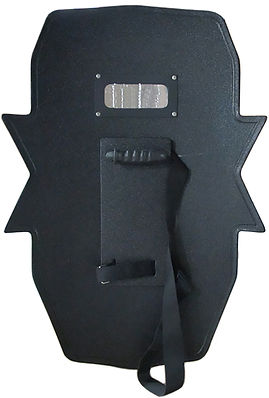
Shields complement suits by providing a mobile barrier that can be positioned between the operator and the item. They are used when a task requires a specific posture or when the operator must approach from a particular angle. Together, suits and shields create a protective envelope that allows trained personnel to carry out controlled interventions with reduced exposure to risk.
Associated product category: Personal Protection.

Ballistic Suits and Operator Protection
Ballistic protection is the operator’s final layer of defence. It is worn or deployed when proximity cannot be avoided, and it is designed to mitigate the effects of a blast, device fragmentation, and overpressure.
The EOD suit must balance protection with mobility as much as is feasible. Operators need to kneel, reach out, manipulate tools and equipment, and maintain situational awareness, all while remaining shielded from hazards. Helmets and visors must provide clear visibility and offer communication capability, while the suit’s fabric and structure should efficiently distribute blast energy away from the person to prevent damage to both the head, body, limbs, and internal organs.
Shields complement suits by providing a mobile barrier that can be positioned between the operator and the item. They are used when a task requires a specific posture or when the operator must approach from a particular angle. Together, suits and shields create a protective envelope that allows trained personnel to carry out controlled interventions with reduced exposure to risk.
Associated product category: Personal Protection.

How Equipment Supports Controlled Response Procedures
Controlled response procedures rely on the integration of handling systems, suppression equipment and ballistic protection. Each plays a distinct role within the wider safety model.
Handling systems provide the means to move or stabilise an item without introducing unnecessary disturbance. Suppression equipment ensures that, if an unexpected event occurs, its effects are contained as far as possible. Ballistic suits and shields protect the operator during the moments when proximity is unavoidable.
This layered approach ensures that no single component carries the entire burden of safety. Instead, each system reinforces the others, creating a coherent and predictable framework for managing hazardous items. Richmond Defence Systems designs its equipment to support this integration, ensuring that handling, suppression and protection solutions work together to enable safe, structured and repeatable RSPs.


Procurement Advice
If your organisation requires any advice on selecting equipment for handling and suppression, or PPE, our team can provide support. Please contact us to discuss your project or tender.


